
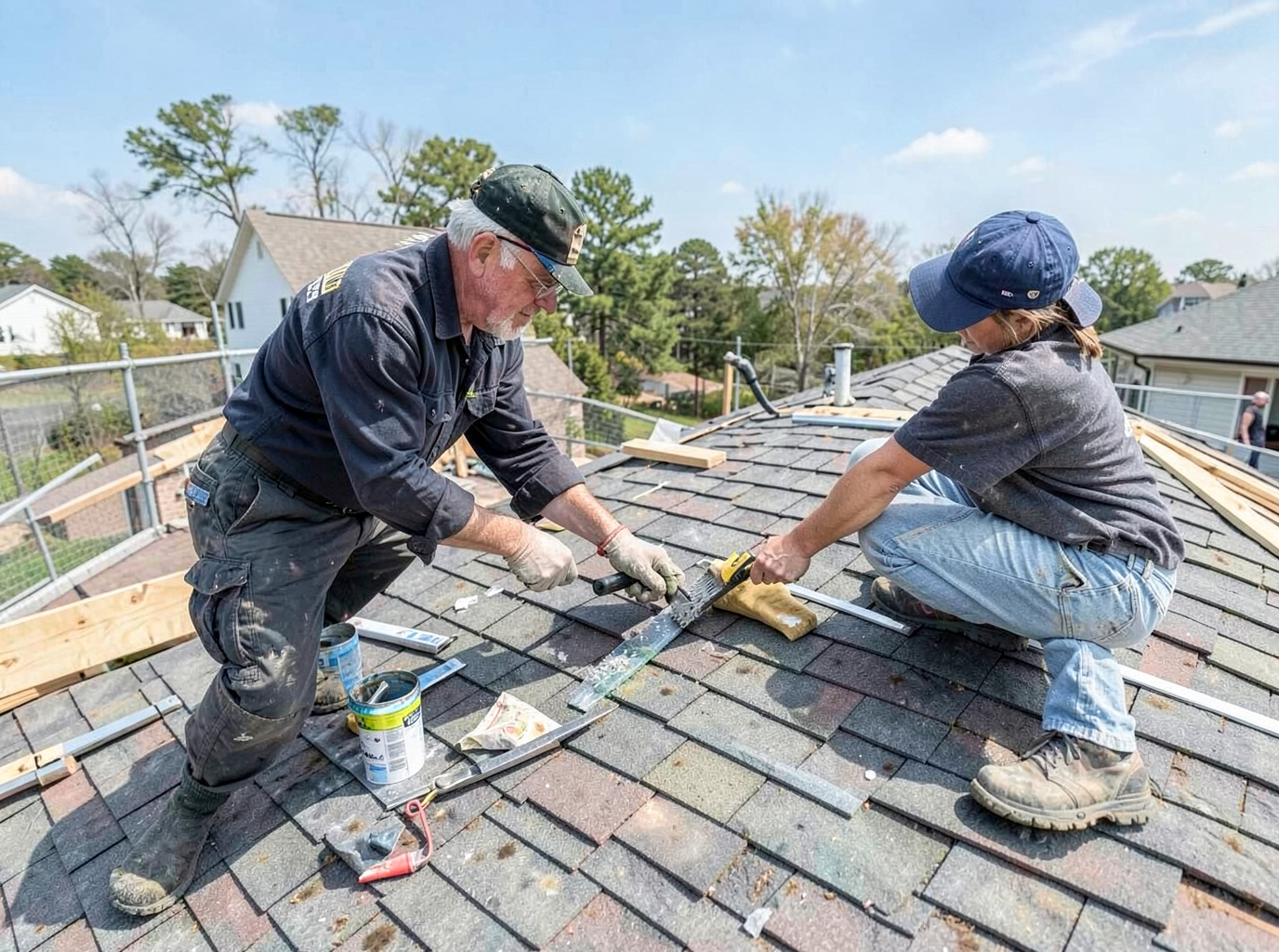
Tyler homes in neighborhoods like Charnwood and the Azalea District often feature older rafter systems from the mid-20th century that require careful deck inspection before new roofing goes down. Humid subtropical conditions bring frequent summer thunderstorms and occasional ice in mild winters, so proper underlayment and ventilation prevent moisture buildup that leads to deck rot. Installers working near the Tyler Municipal Rose Garden or Caldwell Zoo routinely check for wind-driven rain exposure on south-facing slopes.
Metal roofing performs well in Smith County because it sheds pine needles and handles the heat load from long summers better than traditional shingles. Homeowners in Hollytree and nearby Whitehouse frequently request standing-seam systems for the reduced maintenance during pollen season. Proper flashing around chimneys and skylights is critical where tree cover from local parks increases shade and humidity pockets.
Asphalt shingles remain the most requested material for Lindale and Downtown Tyler properties because they match existing rooflines and meet current Smith County wind-load expectations. Installation crews verify attic ventilation first, since many 1960s–1980s homes were built with minimal soffit intake. Edge drip edges and ice-and-water shields are added at eaves where winter temperature swings still occur.
Tile and slate installations appear on custom homes near the Tyler Museum of Art and require extra underlayment weight considerations on older trusses. Crews confirm load ratings before delivery because the clay soil in parts of Smith County can shift slightly after heavy rains, affecting foundation-to-roof alignment over time.
Technician insight
In Tyler the thing that catches most people out with Roofing Installation is skipping a full deck inspection on 1970s Charnwood homes. Once you open it up you often find soft spots from years of trapped humidity that never showed from the attic side.
Hollytree Metal Roof Swap
Homeowner called after noticing leaks near a skylight during summer storms. Inspection revealed deteriorated felt underlayment and blocked ridge vent on a south-facing slope. Crew removed old shingles, replaced two sheets of decking, installed new synthetic underlayment and standing-seam metal. Attic now stays drier and the roof handles pine needle buildup without pooling.
Roofing Installation Services We Offer
✓Asphalt Shingle Installation
Matches the look of existing roofs in Charnwood and Azalea District while adding modern wind and algae resistance suited to Tyler summers.
✓Metal Roof Installation
Standing-seam systems that shed pine pollen and handle summer heat in Hollytree and Lindale homes with minimal maintenance.
✓Tile Roof Installation
Clay or concrete tile systems installed on custom properties near the Tyler Museum of Art with added underlayment for humidity control.
✓Architectural Shingle Upgrade
Replaces standard shingles with thicker architectural profiles that improve curb appeal on Downtown Tyler and Whitehouse homes.
✓Ventilation and Insulation Integration
Adds ridge vents and baffles during installation to reduce attic moisture common in Smith County’s humid climate.
Roofing Installation Cost in Tyler, TX
| Service | Typical Range | What Affects It |
|---|---|---|
| Asphalt Shingle Installation | $4.50–$7.50 per sq ft | Varies with architectural vs standard shingles and any deck replacement |
| Metal Roof Installation | $8–$14 per sq ft | Higher for standing seam; lower for screw-down panels on simple roofs |
| Tile Roof Installation | $10–$18 per sq ft | Includes extra underlayment and structural checks common on older Tyler homes |
| Ventilation Upgrade During Install | $800–$2,200 | Depends on attic size and existing soffit conditions |
Ranges are typical for Tyler, TX and confirmed with an exact written quote before any work starts.
How it works
- 1
Site Assessment
Measure roof pitch, check deck condition, and note ventilation needs on homes in specific Tyler neighborhoods.
- 2
Material Selection
Review asphalt, metal, or tile options with the homeowner based on local weather exposure and existing structure.
- 3
Deck Preparation
Replace damaged sheathing, install drip edge, and apply ice-and-water shield at eaves and valleys.
- 4
Installation And Flashing
Lay underlayment, install new roofing, and seal all penetrations around chimneys and skylights.
- 5
Final Inspection
Walk the roof, clear debris, and confirm ventilation works before leaving the job site.
Pricing
Pricing depends on roof size, pitch, material choice, and whether deck repairs are required.